
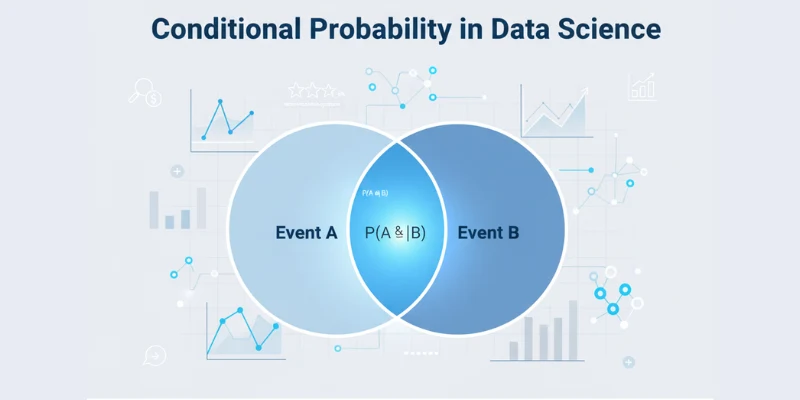
Conditional probability is a fundamental concept in data science that helps us understand how the probability of one event changes when we know another event has occurred. It plays a key role in building predictive models, analyzing patterns, and making informed decisions based on data. If you’re looking to build a strong foundation in such core concepts, enrolling in a Data Science Course in Mumbai at FITA Academy can be a great step forward. In this blog, we will explore what conditional probability is, why it matters in data science, and how it is used in real-world applications.
What is Conditional Probability?
Conditional probability describes the likelihood of an event occurring, given that a specific event has taken place beforehand. It is written as P(A | B), which means “the probability of A given B.” This concept helps data scientists focus on specific segments of data instead of analyzing the entire dataset as one uniform group.
For example, the possibility that a customer may buy a product after clicking on an advertisement might be of interest to you if you are researching consumer behavior. This is a classic use of conditional probability, as it lets you tailor your insights based on observed conditions.
Why Conditional Probability Matters in Data Science
Understanding conditional probability allows data scientists to uncover deeper relationships between variables. It is especially useful when dealing with uncertainty or when past data needs to be used to predict future behavior. By narrowing the scope of analysis to certain known events, it becomes easier to make more accurate predictions. If you’re aiming to master such essential concepts, joining a Data Science Course in Kolkata can provide the practical knowledge and guidance you need to apply them effectively in real-world scenarios.
In machine learning, conditional probability is used in classification problems, especially in algorithms like Naive Bayes. These models rely on the idea that the likelihood of a certain class depends on the features observed in the data. This conditional approach helps algorithms determine which category a data point most likely belongs to.
Common Use Cases in Data Science
One of the most common applications of conditional probability is in fraud detection. Financial institutions often use it to assess the likelihood of a transaction being fraudulent given that certain risk indicators are present. If a transaction is made from a new location and exceeds a typical spending limit, the probability of it being fraudulent increases significantly.
Another example is in recommendation systems. When streaming platforms suggest content, they often rely on conditional probability. For instance, if a user has watched several mystery shows, the system may calculate the likelihood that they will enjoy a new mystery series. This is based on the condition that the user has shown interest in similar content before. To learn how to build such intelligent systems, enrolling in a Data Science Course in Delhi can help you gain hands-on experience with these concepts and their applications.
Conditional probability also plays a role in A/B testing. When testing two versions of a webpage, analysts look at the probability of a user converting given that they saw version A versus version B. This helps in making data-driven decisions about which design or feature performs better.
Conditional probability is not just a theoretical concept. It is a practical tool that helps data scientists analyze data more effectively. By understanding how events relate to each other, professionals can develop models that are both insightful and accurate. Whether you’re building a fraud detection system, developing a recommendation engine, or conducting user analysis, conditional probability is a concept you will use regularly. To master this skill and enhance your data science expertise, consider joining a Data Science Course in Pune that offers comprehensive training and real-world projects. Your data-driven decisions can become much better as a result.
Also check: Advanced Data Visualization: Geospatial Analysis and Heatmaps